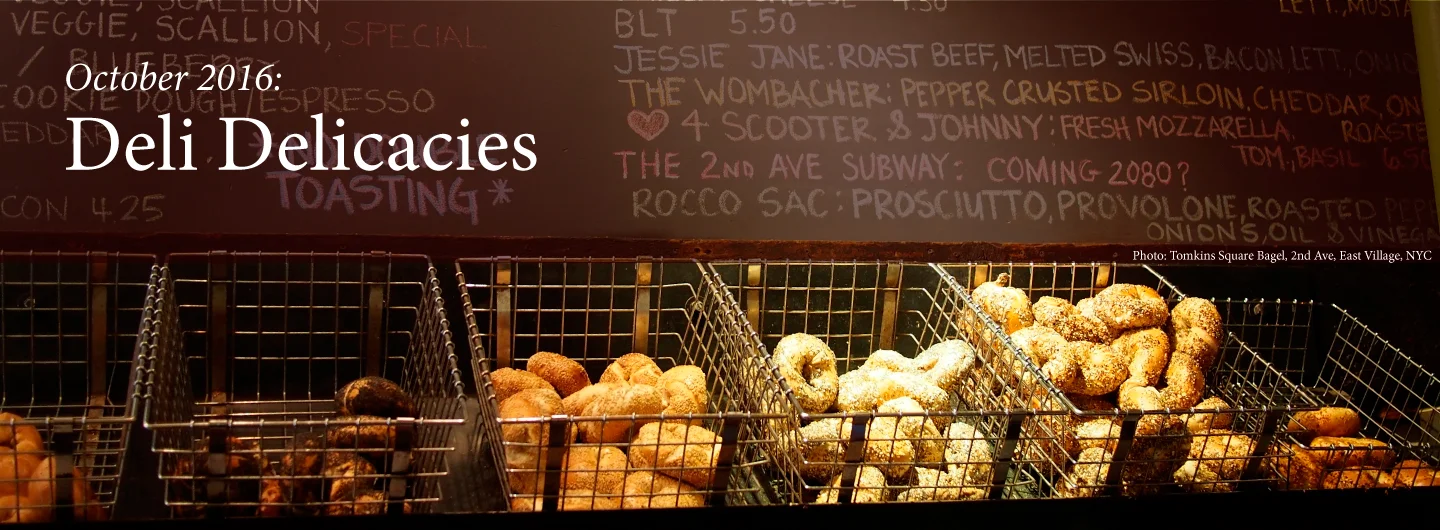
Bagels
/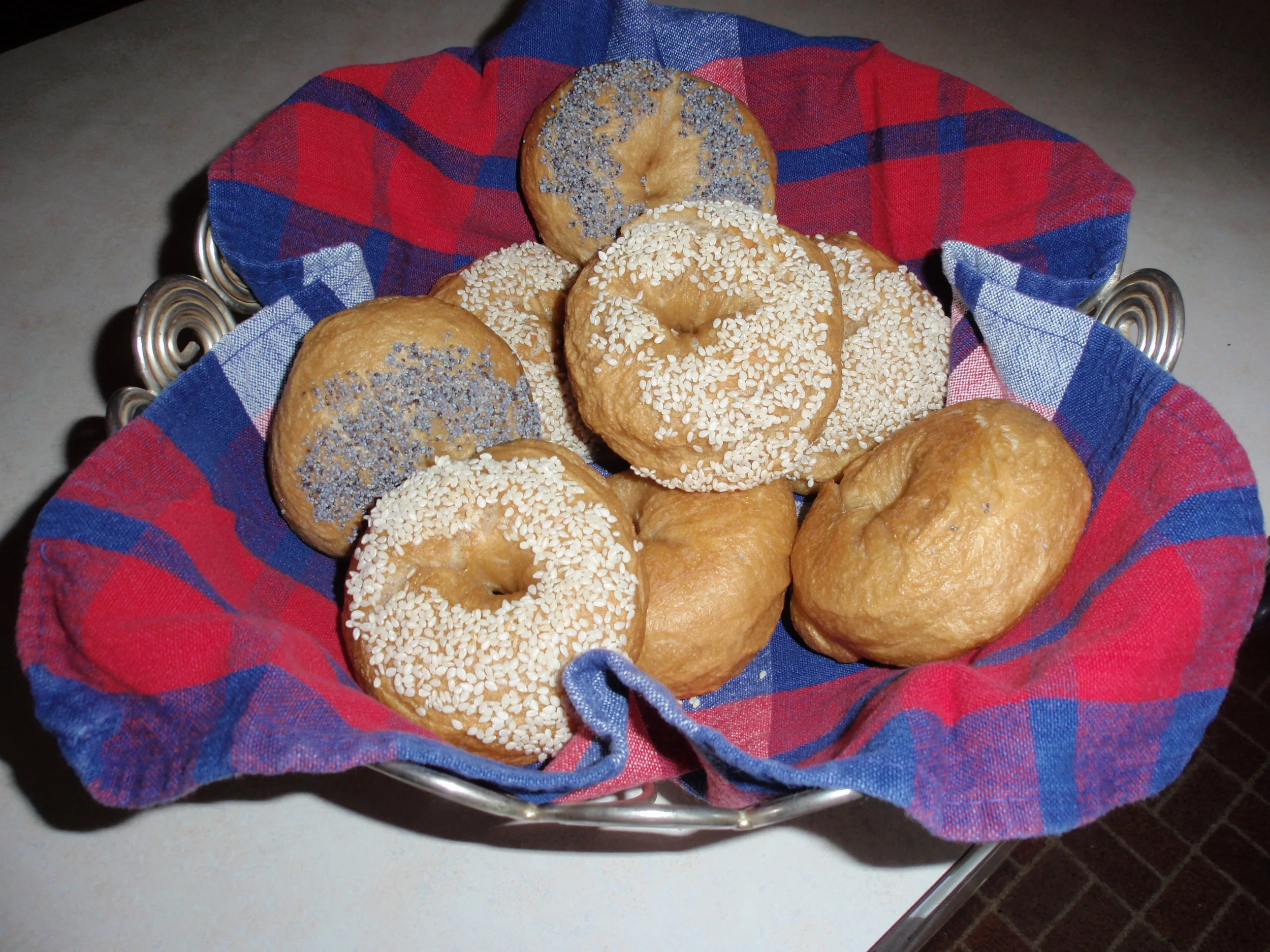
Mandatory for any proper deli brunch, this is the real, New York deal – crackly, browned crust and chewy inside.
Makes 8
Ingredients
1 tablespoon kosher salt
Sesame seeds or poppy seeds (optional)
6 grams lye (or, 2 tablespoons kosher salt plus 2 tablespoons baking powder)
1½ tsp active dry yeast
1½ cups lukewarm (about 80°F) water
4+ cups unbleached flour
8 grams diastatic malt powder
4 tsp wheat gluten
Equipment
Large, stainless steel pot (at least 4 quarts, do not use aluminum)
Skimmer or large slotted spoon
Cooling rack
Standing mixer with dough hook attachment
Baking sheet
Silpat non-stick baking sheet mat (or cornmeal)
Baking stone
Instructions
- Mix together yeast and water in the bowl of a standing mixer with a dough hook.
- Meanwhile, combine 4 cups of flour, diastatic malt powder, gluten and 1 tablespoon salt into a bowl. Whisk thoroughly to sift and combine.
- Add flour mixture, 1 cup at a time, to yeast mixture, beating at the lowest speed until you’ve add all the flour and the dough is rough-looking and just barely holding together, about 4 minutes.
- Increase speed to medium-slow and continue mixing until dough is very elastic, forms a smooth, stiff, shiny ball and cleans the sides of the bowl. If dough feels too wet and continues to stick to the bowl, add more flour a couple of tablespoons at a time while continuing to mix. Allow each bit of added flour to incorporate fully before adding more. Continue this process until the dough is stiff enough to clean the bowl. This should take about 8 to 10 minutes.
- Put dough on a lightly floured surface and cut into 8 equal pieces; then roll into smooth balls. Cover with plastic wrap and let rest for 5 minutes.
- Meanwhile, turn the baking sheet upside-down and cover it with the Silpat mat (or dust with cornmeal).
- Roll each ball into an 8-10 inch-long snakelike shape, tapering the dough at each end. Circle the dough around your hand, pinching the ends together and rolling between your palms once or twice to seal. Put the bagels on the upside down baking sheet.
- Cover well with plastic wrap and refrigerate for at least 1 hour, and up to 24 hours.
- Heat the oven to 450°F. Adjust one rack to the lowest position, and put the baking stone on it. Place the other rack in the second-to-highest position.
- Add 4 quarts of water to the stainless steel pot, and bring to a boil.
- Pour poppy or sesame seeds into a shallow bowl, wider than the bagels.
- Add the lye (or 2 tablespoons of salt and 2 tablespoons baking powder) to the boiling water, and remove the bagels from the refrigerator.
- Carefully place just enough bagels into the pot to cover the surface of the water, making sure that there are no bagels resting on top of one another. Boil for one minute; then flip to the other side for another minute. Remove the bagels and drain well, flatter bottom-side down, on a cooling rack.
- If making poppy or sesame bagels: working quickly, dip the top of the bagels, one by one into the seeds.
- Place bagels back onto the Silpat-covered baking sheet, top side down.
- Bake on the second-to-highest shelf of the oven for 8 to 10 minutes. Then flip the bagels, rotate the pan and continue baking for about 8 minutes more, or until they are golden brown. Let cool slightly on the cooling rack, then serve warm.
My husband says: OK, I know this looks complicated and requires a bunch of stuff you probably don’t already have in your pantry; but believe me – the results are worth it. And once you’ve tried this a time or two, it’s easy to whip up a fresh batch in the morning before brunch-time!
With regard to the special ingredients, here’s the scoop:
Diastatic malt powder contains an enzyme that helps break down starches into sugars. More sugar in the dough helps create a browner crust through caramelization. Here’s a good source from King Arthur Flour.
Wheat gluten increases the protein content of the dough, making it chewier after kneading. King Arthur Flour has that on hand, as well.
The lye in the boiling water lowers its pH, which is necessary to create the crackly crust that differentiates a bagel from just another round piece of bread. As it turns out, lye is also used as a drain cleaner! Although cooking food with this might freak some people out, I highly recommend you give it a shot. There are a number of places to find food-grade lye, including Amazon.